
首页

归档

关于

友链

存档点
MapReduce & Go

MapReduce & Go

文章目录

z0z0r4
z0z0r4
文章
32
分类
21
标签
25

首页

归档

关于

友链

存档点
2026-09-24 2026-10-13

MapReduce 和 Go 相关

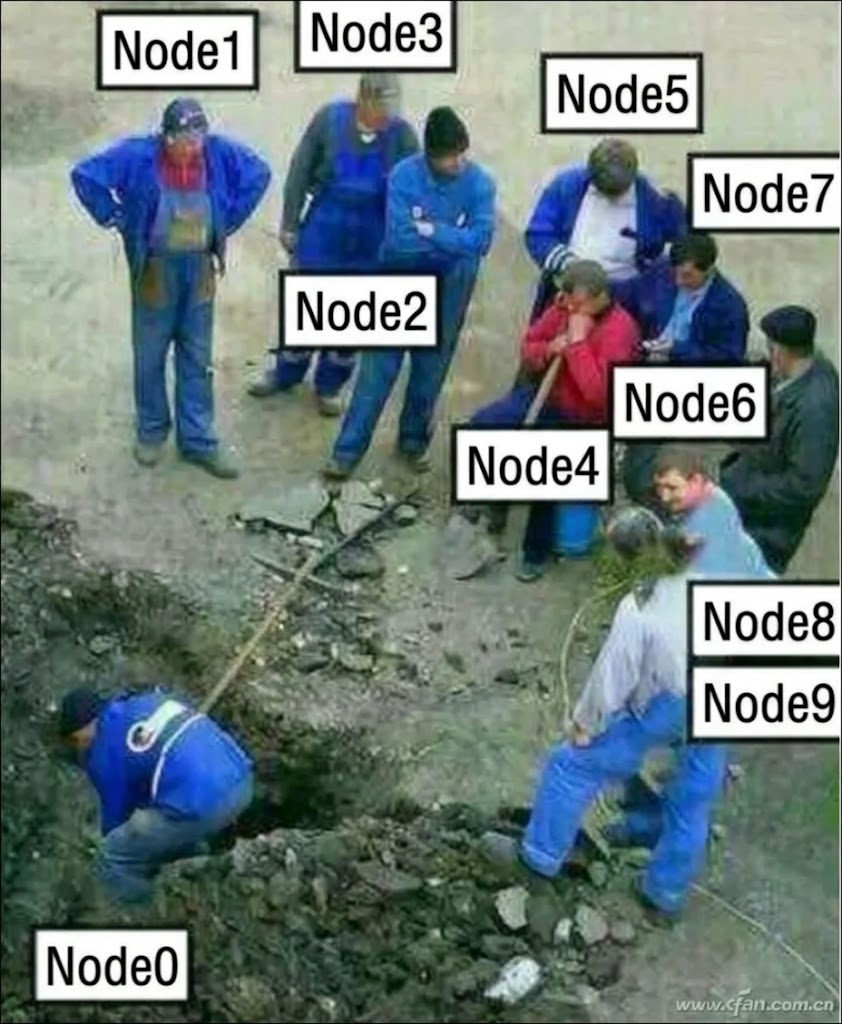
One Worker Nine Watchers

找封面的时候突然看到一核有难多核围观,这下不得不改一张了


MapReduce 通过提供 MR 框架,为用户提供分布式计算的能力,用户需要为任务设计 Map 和 Reduce 函数。

MapReduce 对任务有要求,得是无状态的函数。

例如下方的 wc.go:

1
2
3
4
5
6
7
8
9
10
11
12
13
14
15
16
17
18
19
20
21
22
23
24
25
26
27
// The map function is called once for each file of input. The first
// argument is the name of the input file, and the second is the
// file's complete contents. You should ignore the input file name,
// and look only at the contents argument. The return value is a slice
// of key/value pairs.
func Map(filename string, contents string) []mr.KeyValue {
// function to detect word separators.
ff := func(r rune) bool { return !unicode.IsLetter(r) }

// split contents into an array of words.
words := strings.FieldsFunc(contents, ff)

kva := []mr.KeyValue{}
for _, w := range words {
kv := mr.KeyValue{w, "1"}
kva = append(kva, kv)
}
return kva
}

// The reduce function is called once for each key generated by the
// map tasks, with a list of all the values created for that key by
// any map task.
func Reduce(key string, values []string) string {
// return the number of occurrences of this word.
return strconv.Itoa(len(values))
}

目的是为了统计词频,输入是一批文件,输出是每个单词出现的次数。

Map 函数处理单个文件并返回一个 KeyValue 数组,Key 是单词,Value 是出现次数(这里是 1),Reduce 函数处理同一个 Key 的所有 Value 并返回总数。

注意到这里的 mr.KeyValue{w, "1"} 始终是 1,没在 Map 内部做累加。事实上也可以改为在 Map 内预先做累加,然后再在 Reduce 进一步累加各个 Map 的中间结果,得出最终结果。

那么被隐藏的部分就由 MapReduce 框架来完成了。MapReduce 有两个部分:Coordinator 和 Worker,Coordinator 负责分配任务,Worker 负责执行任务。

那么显然,由框架完成的部分包括分配任务、收集中间结果、分发 Reduce 任务、收集最终结果。

Map 输出的是 []mr.KeyValue,Reduce 输入的是 {string, []string} 显然中间还有步骤。

Map 的输出会被直接保存到文件中,例如:mr-<MapTaskID>-<ReduceTaskID>.json,Map 函数要预先知道哪些 Reduce 会分配哪些 Key 的处理,然后提前按照 Reduce 所属的 Key 分组写入不同的中间文件。(通常通过一个 Hash 函数来决定 Key 属于哪个 Reduce)

所有 Map 任务完成后,分配到 Reduce 任务的 Worker 要读取所有 Map 输出的中间文件中,与其 ReduceTaskID 匹配的中间文件,例如 mr-*-<ReduceTaskID>.json,归并排序后划分相同 Key 的全部 Value 到数组中,然后传入 Reduce 函数。

1
2
3
4
5
6
7
8
9
10
11
12
13
14
15
16
// mr-<MapTaskID>-<ReduceTaskID>.json

{"Key":"The","Value":"1"}
{"Key":"Project","Value":"1"}
{"Key":"Gutenberg","Value":"1"}
{"Key":"of","Value":"1"}
{"Key":"The","Value":"1"}
{"Key":"of","Value":"1"}
{"Key":"at","Value":"1"}
{"Key":"and","Value":"1"}
{"Key":"You","Value":"1"}
{"Key":"copy","Value":"1"}
{"Key":"terms","Value":"1"}
{"Key":"of","Value":"1"}
...

最后得到的结果是一串 Reduce 输出文件,例如 mr-out-<ReduceTaskID>。由于相同 Key 只会分配到同一个 Reduce 任务,因此最终输出的文件中不会有重复 Key。


MapReduce 框架容忍 Worker 故障,但是不特殊处理的话,Coordinator 故障就会导致整个任务失败,这是单点故障。

后来添加了主备机制

Coordinator 作为服务端接受来自 Worker 的请求,Worker 主动请求任务,汇报执行结果。Coordinator 对 Worker 有超时机制,超时则视为故障,将任务重新分配给其他空闲 Worker,非常简单。

以下是 make mr 的测试输出:

1
2
3
4
5
6
7
8
9
10
11
12
13
14
15
16
17
18
19
20
21
22
23
24
25
26
27
28
29
30
31
32
33
34
35
36
37
38
39
40
41
42
43
44
45
46
47
48
49
50
51
52
53
54
55
56
go build -race -o main/mrsequential main/mrsequential.go
go build -race -o main/mrcoordinator main/mrcoordinator.go
go build -race -o main/mrworker main/mrworker.go&
(cd mrapps && go build -race -buildmode=plugin wc.go) || exit 1
(cd mrapps && go build -race -buildmode=plugin indexer.go) || exit 1
(cd mrapps && go build -race -buildmode=plugin mtiming.go) || exit 1
(cd mrapps && go build -race -buildmode=plugin rtiming.go) || exit 1
(cd mrapps && go build -race -buildmode=plugin jobcount.go) || exit 1
(cd mrapps && go build -race -buildmode=plugin early_exit.go) || exit 1
(cd mrapps && go build -race -buildmode=plugin crash.go) || exit 1
(cd mrapps && go build -race -buildmode=plugin nocrash.go) || exit 1
cd mr; go test -v -race
=== RUN TestWc
Coordinator state changed to ReducingState
Coordinator state changed to DoneState
--- PASS: TestWc (21.81s)
=== RUN TestIndexer
2026/09/24 22:06:21 dialing:dial unix /tmp/5840-mr-Qnqbh_02ium0BKw1jRKs: connect: no such file or directory
Coordinator state changed to ReducingState
Coordinator state changed to DoneState
--- PASS: TestIndexer (8.30s)
=== RUN TestMapParallel
2026/09/24 22:06:29 dialing:dial unix /tmp/5840-mr-YnVg0RKkVxWv1YG6Z2Cv: connect: no such file or directory
Coordinator state changed to ReducingState
Coordinator state changed to DoneState
--- PASS: TestMapParallel (8.06s)
=== RUN TestReduceParallel
2026/09/24 22:06:37 dialing:dial unix /tmp/5840-mr-W5i9fmQlLCPCDA9dgS_Q: connect: no such file or directory
Coordinator state changed to ReducingState
Coordinator state changed to DoneState
--- PASS: TestReduceParallel (9.14s)
=== RUN TestJobCount
2026/09/24 22:06:47 dialing:dial unix /tmp/5840-mr-S_xKyY1Z7I3xIZ67jDWd: connect: no such file or directory
Coordinator state changed to ReducingState
Coordinator state changed to DoneState
--- PASS: TestJobCount (12.04s)
=== RUN TestEarlyExit
2026/09/24 22:06:59 dialing:dial unix /tmp/5840-mr-9wk5pOrYuj3kFMExsq5z: connect: no such file or directory
Coordinator state changed to ReducingState
Coordinator state changed to DoneState
2026/09/24 22:07:06 dialing:dial unix /tmp/5840-mr-e8lKxZ_E4zdfQJZYtZ5J: connect: no such file or directory
--- PASS: TestEarlyExit (8.13s)
=== RUN TestCrashWorker
Coordinator state changed to ReducingState
Coordinator state changed to DoneState
--- PASS: TestCrashWorker (62.20s)
PASS
2026/09/24 22:08:08 dialing:dial unix /tmp/5840-mr-4NvqXcDR0Tjn60nBRkag: connect: no such file or directory
2026/09/24 22:08:09 dialing:dial unix /tmp/5840-mr-4NvqXcDR0Tjn60nBRkag: connect: no such file or directory
ok 6.5840/mr 130.723s

以下是关于 Go 的记录:

之前试过 Go 被劝退了,正好这门课程再来尝试一下。

中间遇到了 gob 的坑,对于“零”值,传输时不会传输零值字段,因此也丕会覆盖。必须记得在每轮循环中重置 reply,否则会出现某些字段一直是上一次的值,而不是期待的“零”值。

不再赘述,直接参考以下 Gemini 的看法:

点击展开

这个问题出现的根本原因是:在 Worker 函数中,reply 变量是在 for 循环外层声明的,且每轮循环没有重置;而 Go 的 net/rpc 底层使用 encoding/gob,在序列化时会自动省略零值字段(即 TaskID == 0)。


问题定位与执行轨迹还原

从你的日志中可以看到两组关键信息:

  1. Coordinator 分配的总是 Task 0:FileName 是 ../../main/pg-dorian_gray.txt,对应 TaskID = 0。
  2. Worker 打印的 reply.TaskID 却依次是 5、2、1、7:
1
2
3
4
5
6
Assign map task 0 to worker
Worker 243838: call reply ok=true, reply={HasAssign:true TaskType:0 TaskID:5 FileName:../../main/pg-dorian_gray.txt ...}
...
Assign map task 0 to worker
Worker 243836: call reply ok=true, reply={HasAssign:true TaskType:0 TaskID:2 FileName:../../main/pg-dorian_gray.txt ...}

为什么 TaskID 会变成旧的值?

  1. encoding/gob 的零值优化机制:
    Go 标准库的 encoding/gob 在编码传输时,为了节省网络带宽,不会传输结构体中的零值字段(例如整数 0、布尔 false、空字符串 "")。
  2. 接收端内存未清理:
    当 Coordinator 发送 TaskID: 0 时,网络包中没有包含 TaskID 的键值。Worker 端反序列化到 &reply 时,解码器只更新收到的非零字段(如 FileName、NReduce 等),而未收到的字段直接保留 reply 原结构体中的当前值。
  3. 连锁死锁反应:
  • Worker 243838 上一次执行的是 Task 5,因此 reply.TaskID 为 5。
  • 收到 Task 0 的任务后,FileName 变成了 pg-dorian_gray.txt,但 TaskID 依旧是 5。
  • Worker 跑完后向 Coordinator 发送完成汇报:Finished: true, TaskID: 5。
  • Coordinator 收到汇报,将已经完成过的 Task 5 再次标记完成,而 **Task 0 的状态一直卡在 TaskRunningState**。
  • 10 秒超时后,Coordinator 判定 Task 0 超时未完成,又将其分配给下一个空闲 Worker,再次因为 TaskID = 0 无法被解码覆盖,导致所有 Worker 轮流“替罪”,Task 0 永远无法完成。

修复方法

在 Worker 函数的 for 循环内部,**每轮发起 RPC 之前,必须重新初始化 reply**(建议连同 args 的重置逻辑一起规范):

1
2
3
4
5
6
7
8
9
10
11
12
13
14
15
16
17
18
19
20
21
22
23
24
25
26
27
28
29
30
31
32
33
34
35
36
37
38
39
40
41
42
43
44
45
46
47
48
49
func Worker(sockname string, mapf func(string, string) []KeyValue,
reducef func(string, []string) string) {

coordSockName = sockname

args := Params{}
for {
// 关键修复:每一轮循环都必须使用全新的 reply 结构体
reply := Response{}

fmt.Printf("Worker %d: call args: %+v\n", os.Getpid(), args)

ok := call("Coordinator.Manage", &args, &reply)

fmt.Printf("Worker %d: call reply ok=%v, reply=%+v\n", os.Getpid(), ok, reply)

if !ok {
log.Printf("%d: call failed", os.Getpid())
return
}

if reply.HasAssign {
if reply.TaskType == MapTask {
// 执行 Map 任务逻辑...
// ...
args = Params{
Finished: true,
TaskID: reply.TaskID,
TaskType: reply.TaskType,
}
} else if reply.TaskType == ReduceTask {
// 执行 Reduce 任务逻辑...
// ...
args = Params{
Finished: true,
TaskID: reply.TaskID,
TaskType: reply.TaskType,
}
}
} else {
// 没有拿到任务时 sleep,并清空完成参数,避免下次请求误提交
time.Sleep(500 * time.Millisecond)
args = Params{
Finished: false,
}
}
}
}

除此之外,Go 的 sync 相关也很方便。

以下是 Go web crawler,我记得 https://go.dev/tour/ 也有。

此程序的目标应该是抓取网页,然后递归继续抓取网页中的 URL(排除掉已经抓取过的),直到没有发现新的 URL 或者达到深度限制。

选举于维护一个 fetchedUrls map[string]bool 来记录已经抓取过的 URL,避免重复抓取,但是同时又需要保证并发安全,一般来说应该使用锁来保护这个共享资源。

1
2
3
4
5
6
7
8
9
10
11
12
13
14
15
16
17
18
19
20
21
22
23
24
25
26
27
28
29
30
31
32
33
34
35
36
37
38
39
40
41
42
43
44
45
46
47
48
49
50
51
52
53
54
55
56
57
58
59
60
61
62
63
64
65
66
67
68
69
70
71
72
73
74
75
76
77
78
79
80
package main

import (
"fmt"
"sync"
)

var mu sync.Mutex
var fetchedUrls = make(map[string]bool)

type Fetcher interface {
// Fetch returns the body of URL and
// a slice of URLs found on that page.
Fetch(url string) (body string, urls []string, err error)
}

func testAndSet(url string) bool {
mu.Lock()
defer mu.Unlock()

if fetchedUrls[url] {
return true
}

fetchedUrls[url] = true
return false
}

// Crawl uses fetcher to recursively crawl
// pages starting with url, to a maximum of depth.
func Crawl(url string, depth int, fetcher Fetcher, wg *sync.WaitGroup) {
// TODO: Fetch URLs in parallel.
// TODO: Don't fetch the same URL twice.
// This implementation doesn't do either:
if depth <= 0 {
return
}

if testAndSet(url) {
return
}

body, urls, err := fetcher.Fetch(url)
if err != nil {
fmt.Println(err)
return
}
fmt.Printf("found: %s %q\n", url, body)

for _, u := range urls {
wg.Go(func() {
Crawl(u, depth-1, fetcher, wg)
})
}
}

func main() {
wg := sync.WaitGroup{}
wg.Go(func() {
Crawl("https://golang.org/", 4, fetcher, &wg)
})
wg.Wait()
}

// fakeFetcher is Fetcher that returns canned results.
type fakeFetcher map[string]*fakeResult

type fakeResult struct {
body string
urls []string
}

func (f fakeFetcher) Fetch(url string) (string, []string, error) {
if res, ok := f[url]; ok {
return res.body, res.urls, nil
}
return "", nil, fmt.Errorf("not found: %s", url)
}

...

Go 的 defer 非常有意思,对于对整个函数作用域生效的锁,再也不用对着每个 return 写 mu.Unlock() 了,显然还可以有很多用法,文件释放之类的。

此外 WaitGroup 也很方便,wg.Add(1) 增加计数,wg.Done() 减少计数,wg.Wait() 阻塞等待计数归零。可以当作一个计数信号量来使用,利用 wg.Go(func() { ... }) 来启动一个 goroutine 很顺手,go 本身可以拿来启动 goroutine,很简洁。虽然探索的还不多,但相比之前在 Python 写并发的经历,显然 Go 的并发设计很有一套,确实 go。

以上使用 mutex,然而 Go 还有 channel 原语:

Channels are a typed conduit through which you can send and receive values with the channel operator, <-.

Channels 是一种类型化的管道,通过 channel 操作符 <- 可以发送和接收值。

1
2
3
ch <- v    // Send v to channel ch.
v := <-ch // Receive from ch, and
// assign value to v.

(The data flows in the direction of the arrow.)

数据流动的方向与箭头一致。

Like maps and slices, channels must be created before use:

和 maps 和 slices 一样,channels 必须在使用前创建:

1
ch := make(chan int)

By default, sends and receives block until the other side is ready. This allows goroutines to synchronize without explicit locks or condition variables.

默认情况下,发送和接收会阻塞,直到另一端准备好。这使得 goroutines 可以在没有显式锁或条件变量的情况下进行同步。

以上摘自 https://go.dev/tour/concurrency/2

1
2
3
4
5
6
7
8
9
10
11
12
13
14
15
16
17
18
19
20
21
22
23
24
25
26
27
28
29
30
31
32
33
34
35
36
37
38
39
40
41
42
43
44
45
46
47
48
49
50
51
52
53
54
55
56
57
58
59
60
61
62
63
64
65
66
67
68
69
70
71
72
73
74
75
76
77
78
79
80
81
82
83
84
85
86
87
88
89
90
91
92
93
94
95
96
97
98
99
100
101
102
103
104
105
106
107
108
109
110
package main

import (
"fmt"
"sync"
)

type Fetcher interface {
// Fetch returns the body of URL and
// a slice of URLs found on that page.
Fetch(url string) (body string, urls []string, err error)
}

type crawlResult struct {
depth int
urls []string
}

// Crawl uses fetcher to recursively crawl
// pages starting with url, to a maximum of depth.
func Crawl(url string, depth int, fetcher Fetcher) {
// TODO: Fetch URLs in parallel.
// TODO: Don't fetch the same URL twice.

if depth <= 0 {
fmt.Printf("depth limit reached for: %s\n", url)
return
}

body, urls, err := fetcher.Fetch(url)
if err != nil {
fmt.Println(err)
results <- crawlResult{depth: depth - 1, urls: []string{url}}
return
}
fmt.Printf("found: %s %q\n", url, body)

results <- crawlResult{depth: depth - 1, urls: urls}
}

var tasks = make(chan string, 100)
var results = make(chan crawlResult, 100)

func worker(depth int, fetcher Fetcher) {
for url := range tasks {
Crawl(url, depth, fetcher)
}
}

func coordinator(url string, depth int, fetcher Fetcher) {
fetchedUrls := make(map[string]bool)
pendingtask := 0

tasks <- url
pendingtask++
fetchedUrls[url] = true

worker_wg := sync.WaitGroup{}

for range 4 {
worker_wg.Go(func() {
worker(depth, fetcher)
})
}

for pendingtask > 0 {
// Process results
result := <-results
pendingtask--

if result.depth <= 0 {
continue
} else {
for _, url := range result.urls {
if !fetchedUrls[url] {
tasks <- url
fetchedUrls[url] = true
pendingtask++
}
}
}
}

close(tasks)

worker_wg.Wait()

close(results)
}

func main() {
coordinator("https://golang.org/", 4, fetcher)
}

// fakeFetcher is Fetcher that returns canned results.
type fakeFetcher map[string]*fakeResult

type fakeResult struct {
body string
urls []string
}

func (f fakeFetcher) Fetch(url string) (string, []string, error) {
if res, ok := f[url]; ok {
return res.body, res.urls, nil
}
return "", nil, fmt.Errorf("not found: %s", url)
}

...

将 fetchedUrls 的读写直接全部留在无竞争的 coordinator 中,worker 只负责抓取网页并返回结果,由 channel 通信来交分配任务交换结果,这样不用锁确实很优雅~

我确实觉得脑洞大开,但是 channel 的实现呢?说不定锁只是跑到了后面…离理解似乎还差太远了

TODO:

  • Go Concurrency Patterns: Pipelines and cancellation
  • The Go Memory Model
  • Go Concurrency Patterns
  • Advanced Go Concurrency Patterns
  • Go at Google: Language Design in the Service of Software Engineering

天啊这次的 TODO 居然要列表哈哈哈哈…我这辈子会点开来看吗,真绝望

MIT6.824
  • Distributed System
  • MIT6.824
  • MapReduce
Paxos
前一篇

Paxos

CS144 Check5
后一篇

CS144 Check5

说些什么吧!

giscus
Creative Commons License All website licensed under CC BY 4.0
2025-2026 z0z0r4
基于 Hexo  Theme.Reimu
136.2k  |  11:03
粤ICP备2025511811号
粤公网安备44130302100361号
总访问量   |  总访客量 

文章目录

z0z0r4
z0z0r4
文章
32
分类
21
标签
25

首页

归档

关于

友链

存档点